In busy warehouses, manufacturing plants, and distribution centers, forklift safety is a top priority. One simple yet highly effective way to reduce accidents and increase visibility is through the use of forklift safety lights. These lights aren’t just accessories — they’re essential tools for protecting both operators and pedestrians. Let’s take a closer look at the different types of forklift safety lights available and how each one enhances safety in the workplace.
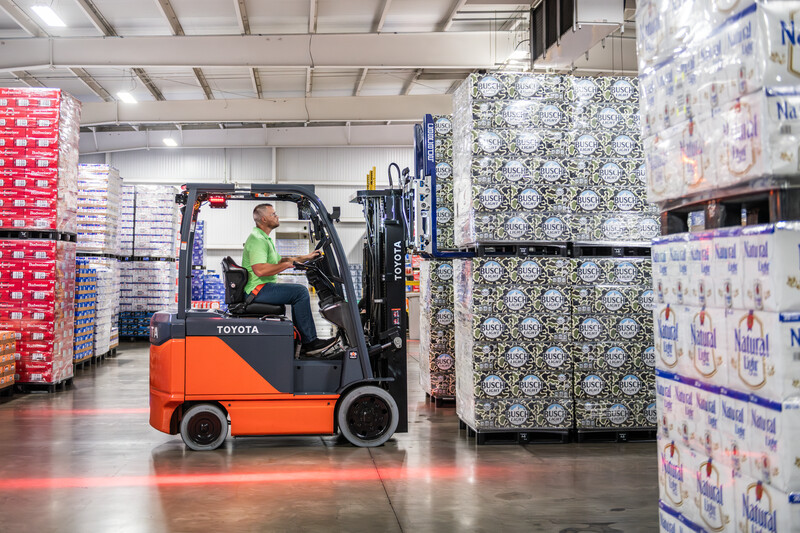
1. Blue Spotlights
Use: To alert nearby pedestrians of a moving forklift.
Where it’s used: Mounted on the front or rear of the forklift, blue spotlights project a bright blue beam onto the floor several feet ahead or behind the vehicle.
Why it matters: The moving spotlight acts as a visual warning system, especially useful in blind corners, intersections, or noisy environments where the sound of a forklift might not be heard.
2. Red Zone Lights
Use: To mark a safety “no-go” zone around the sides of the forklift.
Where it’s used: Mounted on either side of the forklift, these lights project a red line or “halo” around the vehicle.
Why it matters: This red line visually reminds pedestrians to stay a safe distance away, reducing the risk of being struck or sideswiped during turns or tight maneuvers.
3. Rear and Front Work Lights
Use: To improve visibility for the operator during loading, unloading, or driving in poorly lit areas.
Where it’s used: Mounted on the front and rear of the forklift.
Why it matters: These lights illuminate the immediate working area, reducing operator fatigue and allowing for more precise operation, especially on night shifts or in dark storage zones.
4. Strobe or Flashing Warning Lights
Use: To draw attention to the forklift’s presence.
Where it’s used: Often mounted on top of the forklift and flashes continuously while the forklift is in operation.
Why it matters: The strobe effect captures attention quickly, especially in busy or visually cluttered environments. This is particularly effective in outdoor settings or where multiple forklifts are operating.
5. Directional Arrow Lights
Use: To indicate the direction a forklift is turning or moving.
Where it’s used: Projected on the floor ahead or behind the forklift.
Why it matters: Helps pedestrians anticipate the forklift’s movements, giving them time to move out of the way or pause before crossing paths.
Why Invest in Safety Lights?
Adding safety lights to your forklifts isn’t just about following safety protocols — it’s about creating a proactive safety culture. These lights can reduce the likelihood of collisions, protect pedestrians, and improve the overall visibility and awareness in your facility.
Whether you’re running a single-warehouse operation or managing a fleet across multiple locations, forklift safety lighting is a smart investment that pays off in reduced incidents and peace of mind.
Ready to enhance your forklift fleet with safety lighting? Contact our team today to find the right lighting solutions for your equipment and workplace.